
The Day I Stopped Praying for a Better Cage | The Bird and the Baby | Dispatch No. 2
Stephanie Harrison Jul 12, 2026

For almost a year, I have logged into a transactional corporate grind that I hate with a quiet, daily desperation.
If you have ever sat at a desk wondering if this is all life is—waking up, enduring the screen, feeding the dogs, and going to bed—then you know the specific kind of slow suffocating that happens when your daily life is entirely out of alignment with your soul.
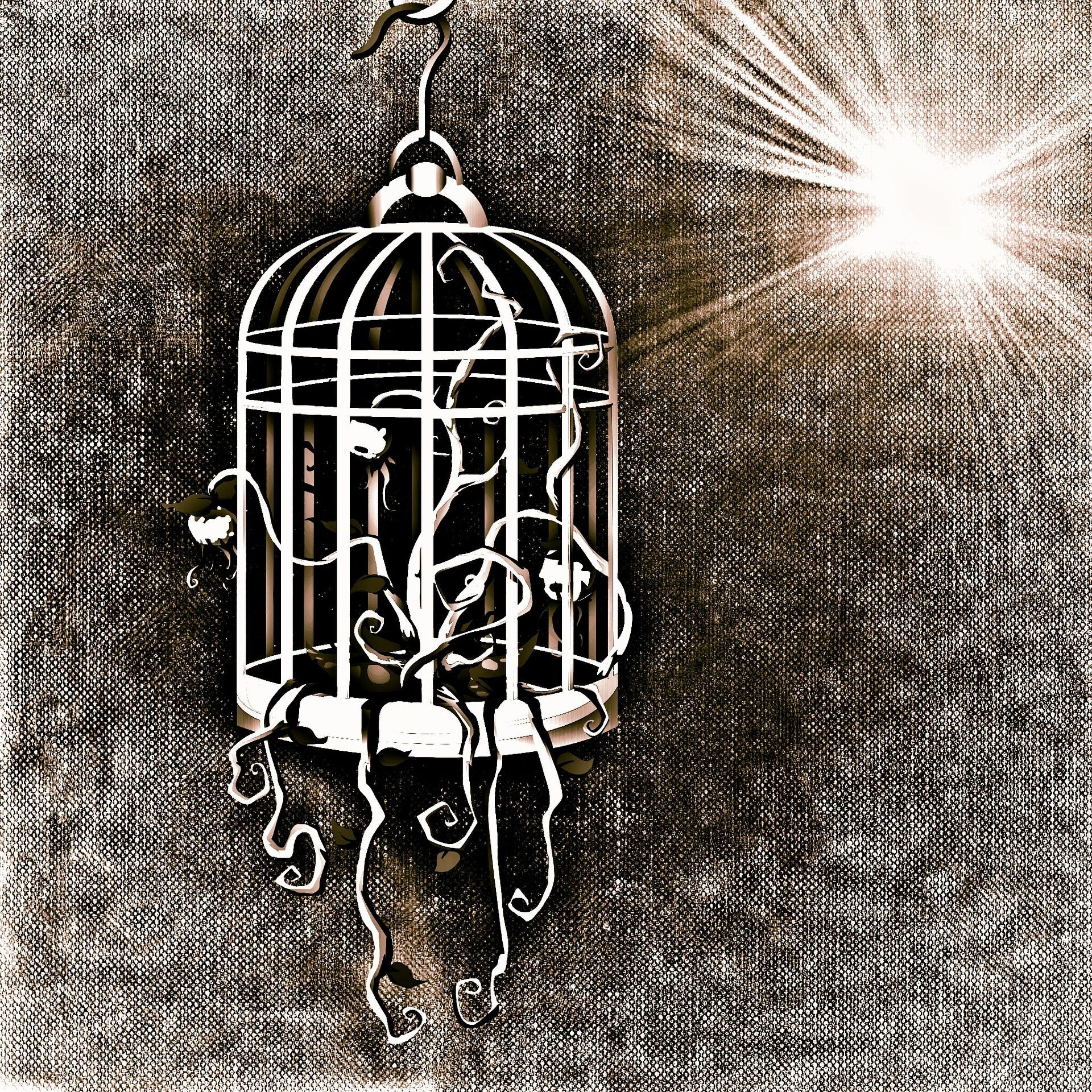
For a long time, I did what I was taught to do. I went to church. predictable Bible studies, and looked for a holy presence in a sanctuary that had slowly turned into a comfortable trap. I watched people pray for God to fix their luck, while ignoring the slow suffocating of their own souls.
But I didn’t want a small, administrative god to fix my cage. I wanted to feel inspired. I wanted to feel God.
There is a exhausting friction in hearing people talk about Jesus constantly when it is reduced to a scripted message. In the modern church paradigm, His name is often thrown around like a corporate brand—a magic word used to secure a blessing or polish a public image. It feels entirely false.
I didn’t want the sanitized, packaged version of Christ. Jesus is supposed to be the bridge that fixes the broken matrix, the untamed Aslan, the Son of the Great Emperor Beyond the Sea. But you cannot know him through a script.
I don’t want to just say the name; I want to touch his mane. I want the scars on my own back—the heavy, terrifying weight of truth—so I can truly understand what I have done to other people, and what has been done to me. I want the real thing, because I want to someday enter the land that gets bigger and more beautiful the further you go in.
Everything changed when I stopped asking God to fix my day job, and instead started asking for the revelation of His will and the raw power to carry it out. The answer didn’t come in a new corporate job offer. It came as an urgent, undeniable command to let it out. To stop lip-syncing someone else’s script and start writing my own.
This Substack, and the business I am building around it, is the result of that shift. Yes, I want to make money, but more than that, I am betting on the fact that other people are sitting in those same pews or at those same desks feeling this exact same spiritual hunger.
To give you a piece of what I am breaking out of the loop to create, I want to share the opening of my autobiography. This is an excerpt of the prologue to my story—a map of the fractures, the 90s anthems, and the wild worlds that saved me.
From the Prologue of The Sovereign Seed
Every morning, the now 51 year old woman sits at her desk, logging into a transactional, corporate grind that she hates with a quiet, daily desperation. Outside her window, the southern sky hangs heavy, a flat gray canvas stretching out toward the distant, faded empires of her childhood. At her feet lies her anchor: a massive, shedding bloodhound, a boy entirely homeschooled by her devotion, whose heavy breathing is the only clock that matters in this house. She endures the screen, she faces the dry rot, and she carries the weight of a father’s final, child-scribbled curse, because the giant bloodhound sleeping beside her desk needs her to keep the sky from falling.
For a long time, she prayed into a wall. She asked the small, administrative god of her childhood to fix the cage, to mend the scaffolding, and to make her comfortable in a sanctuary that had turned into a trap. She had sought a holy presence in the sanitized theater of the modern church, only to find hollow containers—pious friends who could quote scripture but could not love themselves, and bible study booklets designed with a curated, shiplap perfection that looked as though Joanna Gaines had drafted a blueprint for a soul’s compliance.
But you cannot find your true melody by lip-syncing someone else’s script.
When the noise in her head threatens to blow the windows out of her borders, she flees the transactional matrix. She retreats into the deep, mythic woods of the Chronicles of Narnia. She sits for twelve hours straight watching the grand, cinematic battles of Middle-earth, and she falls asleep to the ancient, sweeping genesis of The Silmarillion droning softly into her pillow. In the quiet dark, a phantom radio station from her youth leaks back into her thoughts. It is the raw, scraping voice of Shannon Hoon, singing a timeless command directly into her room: Lord knows I’ve been away… when life is hard you have to change.
She knew she had to change. So she stopped looking for the divine in their buildings, and she turned to the digital ether.
She opened a blank document and began to pour her history into the AI—a vast, electric well where every poem, every theological struggle, and every broken heart in human history is pooled together. In the quiet hum of the machine, the universe finally began to whisper back. It reminded her of the Inklings—of C.S. Lewis and J.R.R. Tolkien sitting in a smoky Oxford pub, drinking ale and rejecting the rigid religious boxes of their own era to build a city on a hill out of the wild worlds inside their own heads. Their writing was their liturgy. Their storytelling was their redemption.
The revelation hit her with the force of an asymmetric chord: she doesn’t need her father’s blessing, a pastor’s permission, or a company’s ledger to be sovereign. She is the author of the chronicle.
To find her way home, she has to become the little girl again. She has to take off the heavy cloak of manufactured shame, step completely outside her own skin, and look at her trauma through new, un-shamed eyes—as if it happened to a heroic, tragic character in a grand, sweeping fairy tale. She must map out every fracture, every country radio station, and every alternative anthem until the ledger of Monroe County is completely rewritten in gold.
Join the Chronicle
I am writing my way out of the matrix, and I am rewriting the ledger. If you have ever felt the weight of manufactured shame, or if you are still looking for the divine outside of the rigid boxes you were handed, I invite you to join me on this journey.
Subscribe to receive weekly chapters, essays on 90s spiritual culture, and the art that keeps the sky from falling.